




Exclusive Glass Finishing
Individual engravings and prints for unique designs
Various techniques are available for glass finishing, taking both aesthetic and functional aspects into account. Below you'll find an overview of the common processes we carry out for you with extensive experience:
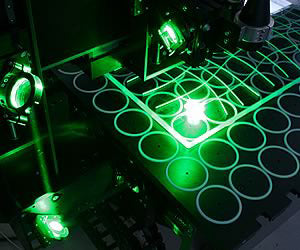
Internal glass engraving (internal laser engraving)
In interior glass engraving, a focused laser beam is directed into the interior of the glass to create tiny dots. The alignment of these dots creates detailed 2D or 3D motifs within the glass body without damaging the surface. This process is particularly suitable for depicting complex structures and personalized designs.
2D glass engraving
Technology
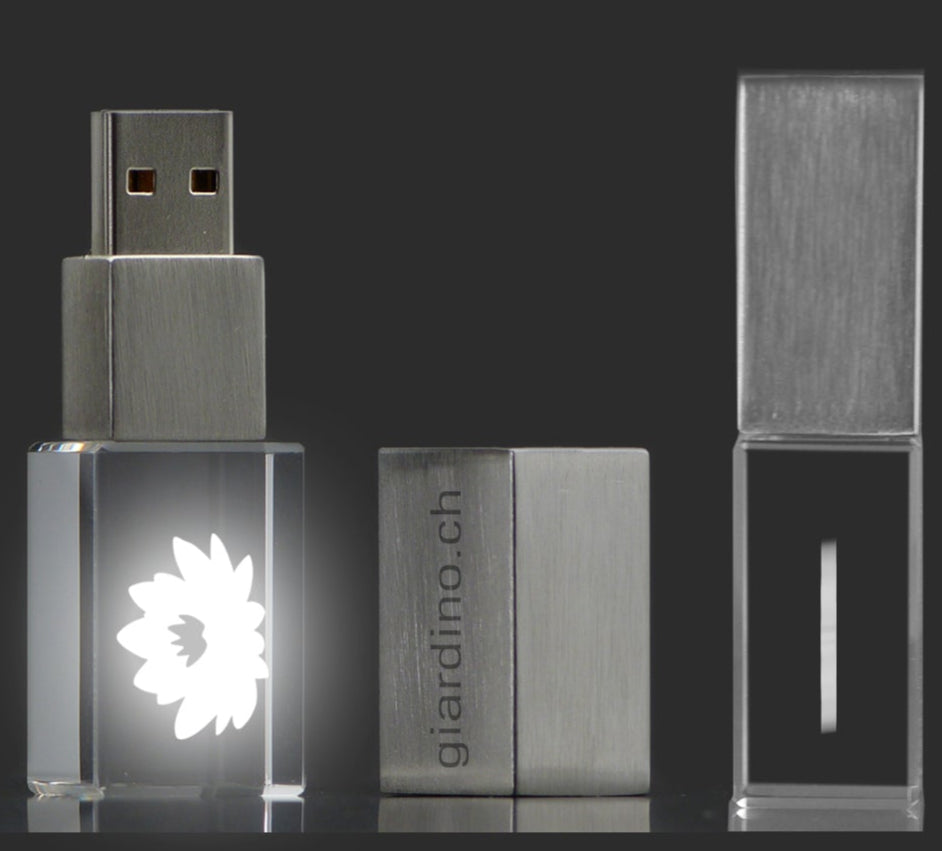
2D glass engraving uses a laser beam to create tiny dots within the glass. These dots are arranged in a single, flat plane, giving the design the appearance of a two-dimensional drawing or shadow play.
Areas of application
Photos and portraits: Particularly popular for depicting faces and souvenir photos.
Logos and lettering: Companies use this technology for high-quality corporate gifts or promotional items.
Architectural drawings: Detailed building plans or technical sketches can be implemented as fine engravings.
Required data
High-resolution images (JPG, PNG, BMP): Black and white photos with high contrast are ideal.
Vector graphics (SVG, AI, EPS): For logos and technical drawings.
Text files: If lettering or personal dedications are to be integrated.
3D glass engraving
Technology
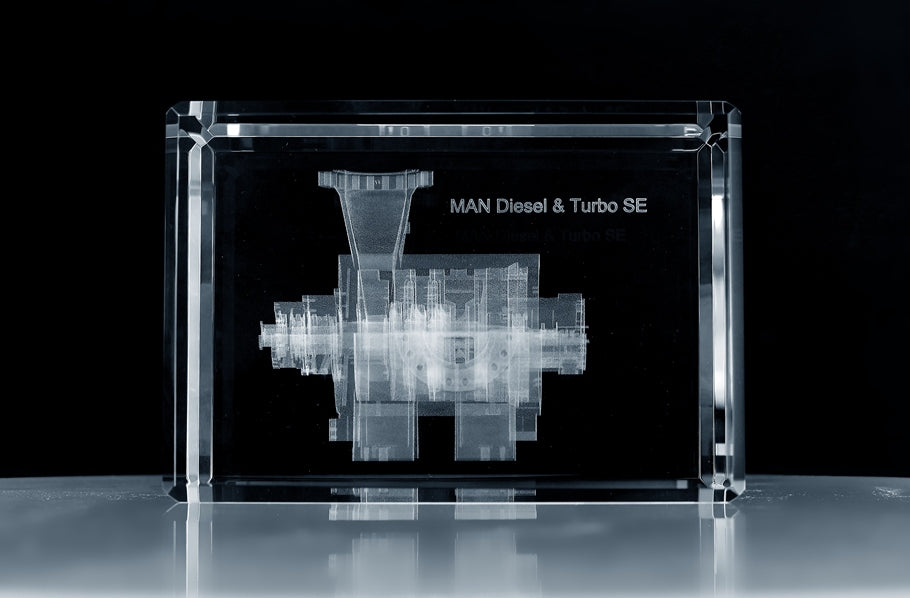
With 3D glass engraving, the motif is placed not just in one plane, but in several depths within the glass. The laser creates millions of tiny dots that combine to form a three-dimensional model inside the glass.
Areas of application
3D portraits and busts: A realistic 3D image of a person can be created from 2D photos using special software.
Architectural models: Detailed 3D representations of buildings or bridges in glass.
Product models: Perfect for promotional purposes or high-quality presentations.
Art and sculptures: Creative 3D designs and miniature models as exclusive decorative pieces.
Required data
3D files (STL, OBJ, 3DS): Ideal for detailed models or complex shapes.
Multiple 2D photos: If no 3D model is available, a 3D image can be generated from multiple perspectives.
Scan data: If a person or object was captured with a 3D scanner.
Conclusion: Which engraving for which purpose?
2D engraving: Ideal for flat designs such as logos, lettering or simple photos.
3D engraving: Perfect for detailed, three-dimensional representations of objects, portraits or models.
Both techniques offer an elegant way to customize glass products – whether as a gift, decoration or promotional item.
Color UV printing on glass
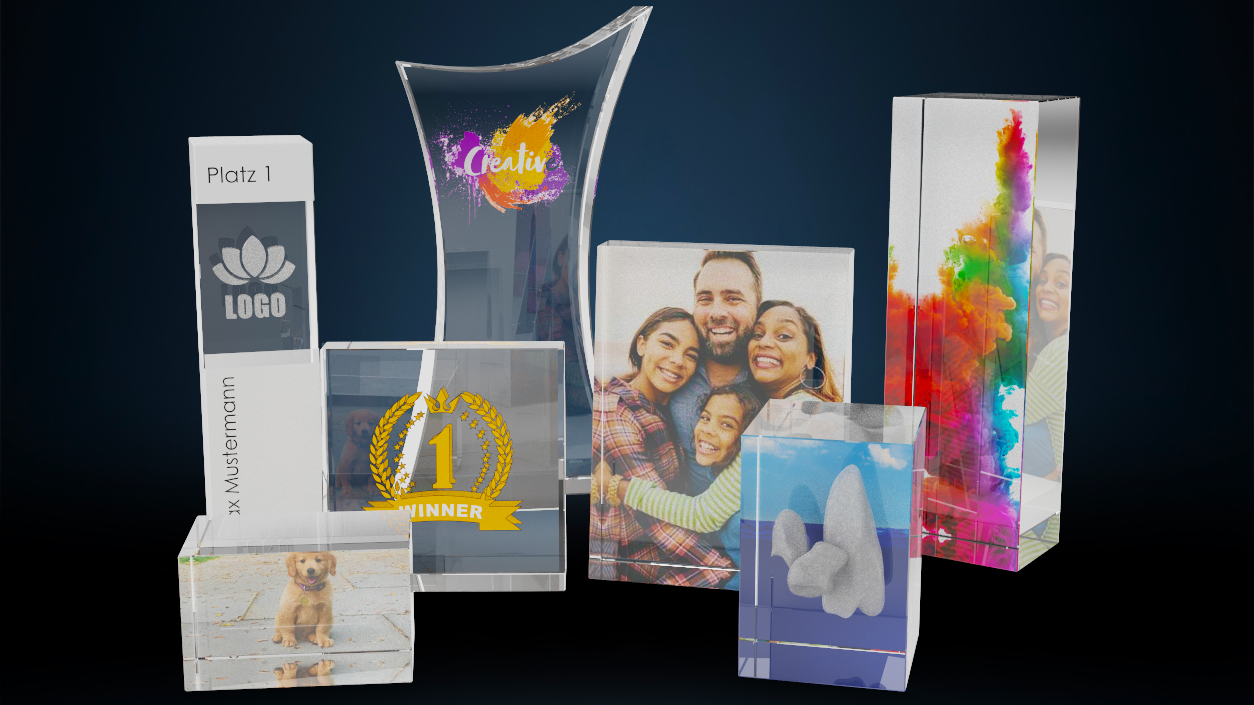
UV printing is based on the inkjet printing process , in which special UV-curing inks are applied directly to the glass. Unlike conventional printing techniques, no heat is used. Instead, the ink droplets are instantly cured with ultraviolet light.
Technology
Direct printing: The ink is precisely applied to the glass surface using a special print head.
UV curing: Immediately after printing, the ink is cured with UV light, making it instantly dry and abrasion-resistant.
Multi-layer printing possible: Several layers of color can be printed on top of each other to create brilliant colors or even 3D reliefs.
Special advantages of UV printing
Brilliant colors: Rich, vibrant shades with high UV resistance.
Water and scratch resistant: The prints are extremely durable and suitable for both indoor and outdoor use.
No pretreatment required: Glass can be printed directly, without primer or special coatings.
High level of detail: The finest lines and color gradients can be realized.
White printing possible: Additional white printing allows display on transparent glass.
Required data
1. Image formats for UV printing
Vector graphics (AI, EPS, PDF, SVG): Ideal for logos and lettering as they can be scaled without loss.
High-resolution raster graphics (JPG, PNG, TIFF): At least 300 DPI for razor-sharp prints.
2. Colors and transparencies
CMYK color mode: UV printers work with cyan, magenta, yellow, and black (CMYK) – RGB colors must be converted.
White print layer: If white print is desired, a separate file or an additional channel must be created.
Transparencies as PNG or TIFF: To isolate subjects and leave the background visible.
Surface engraving on glass and other materials
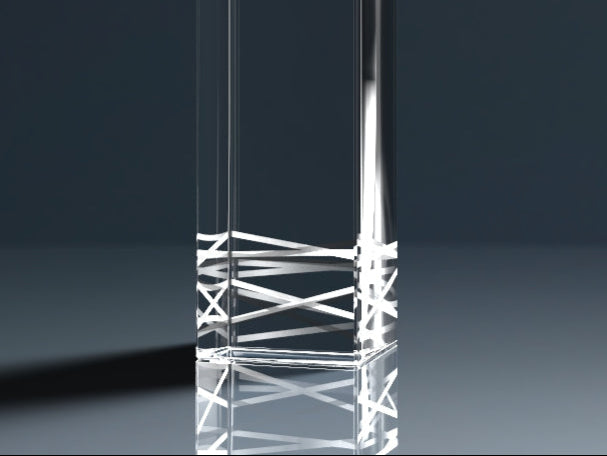
Surface engraving is a high-quality finishing technique in which designs, lettering, or patterns are incorporated into the surface of a material. This is done using various processes such as laser engraving, mechanical engraving, or sandblasting. Especially on glass, surface engraving creates an elegant, sophisticated effect and is permanently abrasion-resistant.
Technology
Laser engraving uses a high-precision laser beam to modify the surface of the material. The laser removes a thin layer of the glass, creating a matte, high-contrast engraving.
Features of laser engraving:
Extremely precise: The finest details and smallest fonts are possible.
Durable & abrasion-resistant: The engraving won't wear off because it's engraved directly into the material. Contactless technology: No mechanical stress on the glass, therefore no risk of cracks or breakage.
Applications:
- Personalized glasses: drinking glasses, wine glasses or bottles with individual engravings.
- Promotional items & corporate gifts: Logos and lettering on glass plates, trophies or awards.
- Signs & Plaques: High-quality signage for indoor and outdoor use.
Required data
To achieve optimal engraving results, suitable files must be provided.
Vector graphics (AI, EPS, PDF, SVG): Best quality for logos and fine patterns.
Black and white images (PNG, JPG, BMP): High contrast for clear engraving results.
- Convert fonts to paths: To avoid problems with uninstalled fonts.
- Minimum line thickness: Very fine lines should be at least 0.2 mm thick to be engraved cleanly.
- Specify engraving size precisely: Depends on the material and engraving technique.
Which materials are suitable for surface engraving?
In addition to glass, many other materials can be engraved:
Crystal and float glass – ideal for elegant engravings with high levels of detail.
Metals (stainless steel, aluminum, brass) – Especially for company signs or awards.
Wood – For rustic, natural engravings.
Acrylic & plastic – For modern, long-lasting engravings with high precision.