




Posted by Andreas Vavelidis
on July 20, 2026

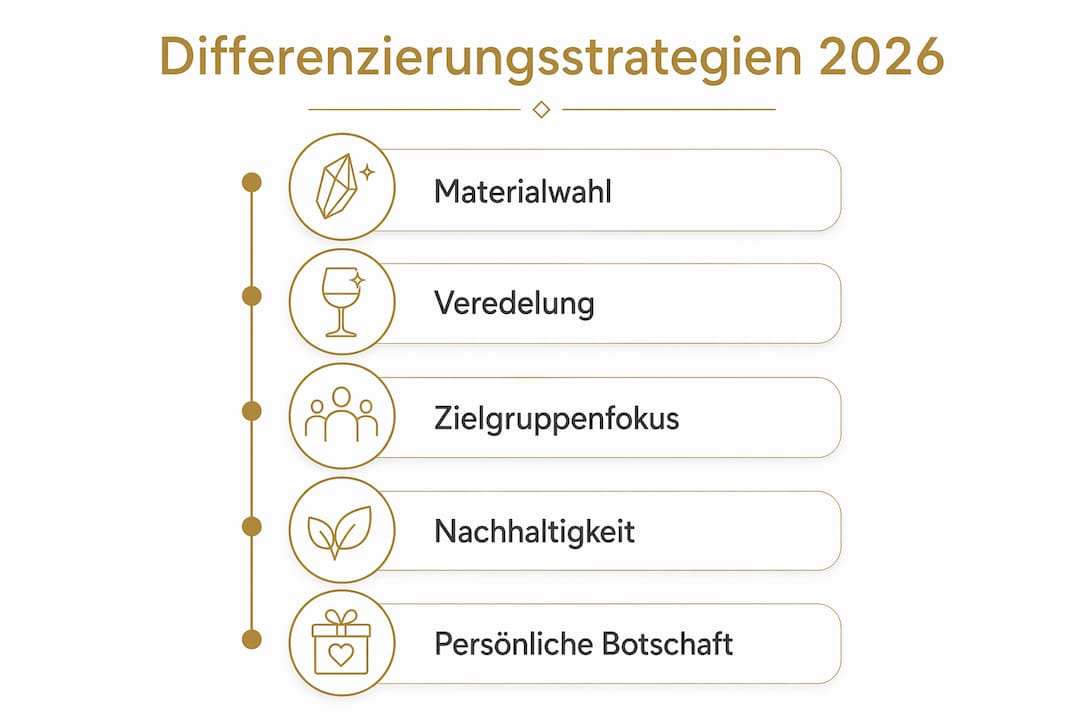
Promotional differentiation refers to the targeted selection and design of promotional products in order to clearly distinguish itself from competitors through quality, refinement and deployment strategy. The term is also known in the industry as "haptic brand differentiation". This is not a luxury issue for marketing managers. Those who use generic giveaways give away budget and brand effect at the same time. The promotional product differentiation is best explained by three axes: the material, the finishing method and the operating moment. Those who consciously choose all three produce an effect in the recipient that hardly reaches digital advertising.
What criteria determine the differentiation of promotional products?
Differentiation in promotional products begins with the choice of material. Stainless steel, glass or natural wood signal value before the recipient even uses the product. Plastic does the opposite. This is not a question of taste, but a direct statement about the brand behind it.
The finishing method enhances this effect. Laser engravings and 3D internal engravings stand out from simple screen printing because they are durable, abrasion-resistant and visually precise. A printed logo fades after a few washes. An engraving remains.

In addition, there is the usage horizon. Standard items are suitable for one-time events, custom-made products for long-term customer relationships with higher lead times. Anyone who ignores this difference buys for the wrong moment.
The most important differentiation features at a glance:
- Material: Glass, stainless steel or natural materials instead of plastic
- Finishing: Laser engraving, 3D subsurface engraving or embossing instead of simple printing
- Personalization: Name, date or individual message instead of standard logo
- Duration of use: Long-lasting items with everyday relevance instead of disposable products
- Operating moment: Targeted gift for the right occasion instead of mass distribution
Professional tip: Check with each promotional item whether it is still visible on the recipient’s desk after six months. If not, it is not a differentiation tool, but waste with a logo.
Scattering losses occur exactly where items are distributed without reference to the recipient. Companies should make the choice of product according to the usage scenario and calculate the resistance to finishing against abrasion and laundry. This ensures brand impact beyond the first moment.
How do sustainable promotional products act as a differentiation factor?
Sustainability is no longer a trend, but a measurable competitive advantage. 74% of consumers rate sustainable advertising measures as more sympathetic. This directly affects the brand image. Those who use sustainable promotional products signal attitude, not just intention.
74 % consumers find sustainable advertising measures more sympathetic. No other differentiator produces this effect so reliably. (Source: GWW, February 2026)
Add to that the carbon footprint. Promotional products are up to eight times more CO2-efficient than other forms of advertising, measured against emissions per reminiscent advertising effect. This means: Haptic promotional products provide more memory value per kilogram of CO2 than digital or TV advertising.
Sustainable promotional product categories that have proven themselves for B2B marketing:
- Long-life glass products and without plastic components
- Products made of recycled or certified sustainable material (FSC wood, recycled stainless steel)
- Items with repairability or refillability, for example stainless steel bottles
- Locally produced items with short transport routes
For Sustainable promotional gifts in marketing applies: The article must be credible with the brand. A company that communicates sustainability while distributing plastic promotional products generates the opposite of sympathy. Consistency between brand message and product selection is the decisive factor here.
What strategies promote successful differentiation?
The most effective strategy follows the principle of "moment before quantity". It is not the number of distributed items that determines effect, but the occasion and the accuracy of fit. For targeted customer loyalty measures, requirements of 50–150 units are optimal to avoid scattering losses. This is significantly less than many marketing departments order.
Five operating moments that generate differentiation:
- Conclusion of the contract: A high-quality gift immediately after the signature anchors the cooperation emotionally.
- Anniversary or Milestone: Personalized articles with date and name show real appreciation.
- Exhibition or conference: Small but high-quality souvenirs are remembered, mass-produced goods end up in the garbage.
- Onboarding of new customers: A welcome package with thoughtful articles sets the tone for the relationship.
- Annual financial statements: Exclusive gifts at the end of the year strengthen the bond and increase the repurchase rate.
Professional tip: Always link the promotional item to a personal message. A handwritten sentence on the supplement increases the perceived value more than any packaging improvement.
Feel and everyday suitability decide on differentiation, not the price alone. An item that is used daily reminds of the brand daily. That's the difference between a promotional item and a giveaway. For a complete Corporate Gifting Strategy worth planning these moments systematically.
If you need giveaways for events, you should clearly separate them from premium gifts. Both have their justification. But they pursue different goals and should never be funded from the same budget.
How can the right quality level for promotional products be determined?
Cheap and cheap are not synonyms. Cheap means fair price in relation to the benefit, cheap stands for smears in material, workmanship or durability. This difference determines whether a promotional item strengthens or damages the brand.
The following table shows where the limit is located:
| Feature | Cheap article | Cheap article |
|---|---|---|
| Material | Solid base quality, e.g. B. Stainless steel or glass | Thin plastic, sharp edges, light weight |
| Finishing | Laser engraving or embossing, permanent | Logo printed on it, fades after a short time |
| Useful life | Several years, suitable for everyday use | A few weeks to months |
| Brand impact | Positive, strengthens confidence | Neutral to negative, looks cheap |
| Litter Loss | Narrow, because targeted | High, since recipients do not keep items |
Typical mistakes in marketing are caused by incorrect prioritization. Many companies buy 1,000 ballpoint pens for €0.30 the piece and wonder about a lack of effect. Targeted, high-quality promotional product with a small edition produces more effect than large quantities of cheap giveaways. This is not an opinion judgment, but an experience from the B2B practice.
The three-axis rule for premium differentiation states that a promotional item should meet at least two of three features: brand premium (recognizable brand message), material premium (high-quality raw materials) and finishing premium (expensive processing). Anyone who serves only one axis, stays in the midfield. Anyone who combines all three clearly stands out.
Discreet branding and high-quality finishing increase the brand effect more than large logos on cheap items. Sounds counterintuitive, but it's well documented. Recipients accept a small, cleanly engraved logo on a glass product far more than an oversized print logo on a plastic product. Less visible surface, more effect. That is the core of the Brand identity with promotional products.
For a good price-performance ratio: Invest 15–25 € per piece in 100 targeted gifts than €1.50 in 1,000 items without recipient relevance. The budget is the same. The effect is different.
Important insights
Promotional differentiation is achieved by combining high-quality material, permanent finishing and targeted use at the right moment.
| Topic | Details |
|---|---|
| Material choice as a base | Glass, stainless steel or natural wood signal value and directly strengthen the brand image. |
| Finishing beats pressure | Laser engravings and 3D internal engravings are durable and abrasion-resistant, simple pressure fades. |
| Small runs, big impact | Editions of 50–150 units for premium gifts reduce scattering losses measurably. |
| Sustainability as an advantage | 74% of consumers rate sustainable advertising measures as more sympathetic (GWW, 2026). |
| Cheap is not cheap | A fair price with utility differentiated. Cheap items damage the brand image. |
Exclusive glass products with 3D subsurface engraving by inCrystal
If you use promotional products that are really remembered, you need a product that fulfills all three differentiation axes. inCrystal has been offering individual glass products for over 18 years 3D laser subsurface engraving, which permanently and aesthetically perpetuate brand messages in the glass.
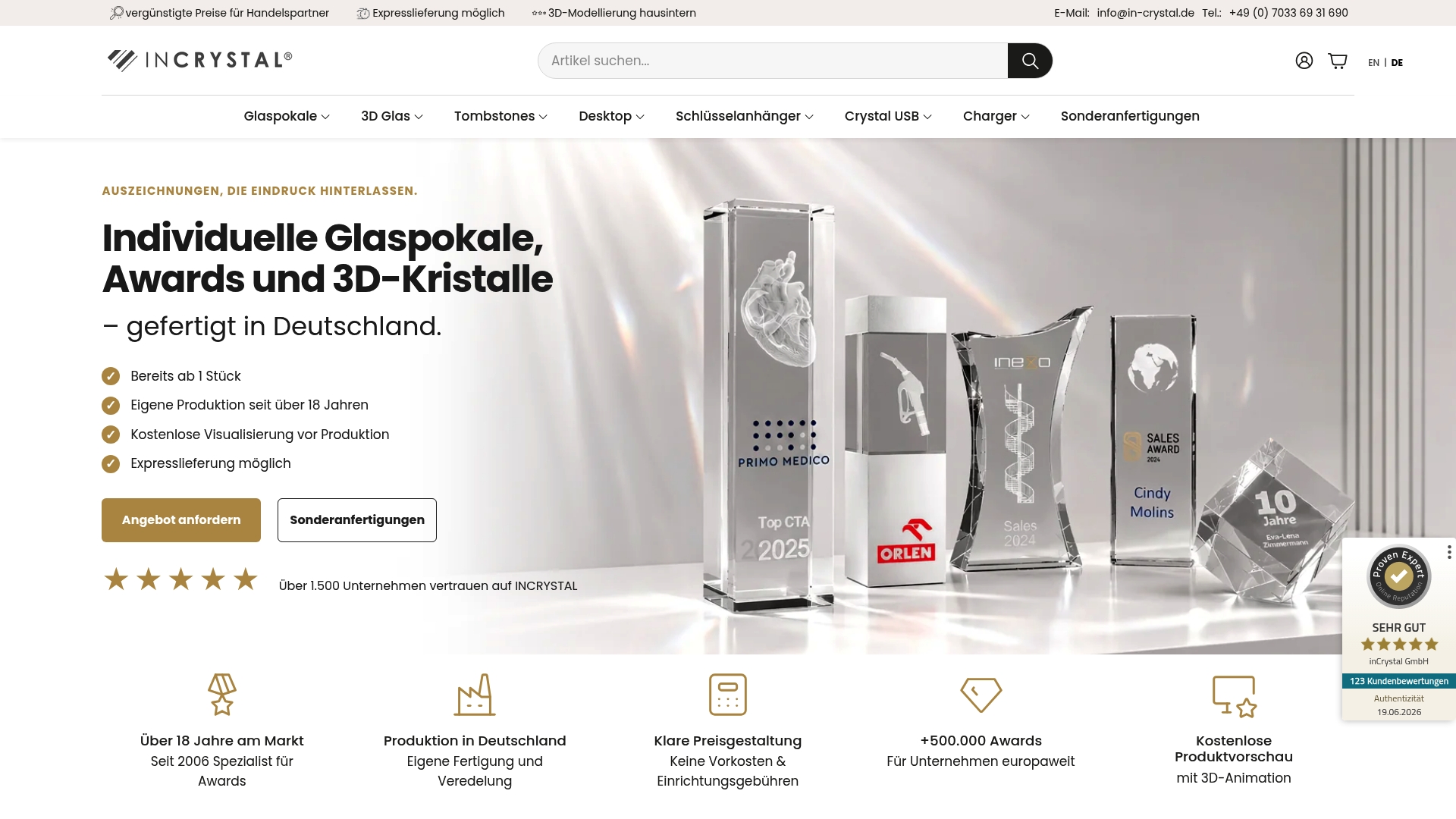
The items are suitable for targeted B2B gifting, awards and anniversary gifts. Each piece is customized, express delivery is possible. inCrystal offers a free 3D visualization before ordering, so you can see the result before you order. Hundreds of companies trust this service. Request your free 3D preview and see what your brand appearance looks like in the glass.
FAQ
What does promotional item differentiation mean specifically?
Promotional differentiation refers to the targeted selection of promotional products by material, refinement and moment of use in order to stand out from competitors and achieve a stronger brand effect.
How do cheap and cheap promotional products differ?
Cheap means fair price in relation to the benefit, cheap stands for smears in material and workmanship, which lead to leakage loss and negative brand effect.
What number of pieces makes sense for premium promotional products?
For targeted customer loyalty measures, runs of 50–150 units are optimal, as they avoid scattering losses and focus on relevant recipients.
Why are sustainable promotional products a differentiation factor?
74% of consumers rate sustainable advertising measures as more sympathetic, which directly improves the brand image. In addition, promotional products are up to eight times MORE CO2-efficient than digital or TV advertising.
What is the three-axis rule for promotional products?
The three-axis rule states that a promotional item should meet at least two of three features: brand premium, material premium, and finishing premium to achieve real differentiation.