




Posted by Andreas Vavelidis
on July 04, 2026

Generic promotional products fail because they ignore the everyday lives of recipients, appear cheap and create no brand value. Generic promotional products are often not used permanently if only the lowest unit price counts when choosing. This means: The budget is gone, the brand remains invisible. Anyone planning promotional products as a marketing manager is faced with a clear decision. Either you invest in relevance and quality, or you give away money to items that no one needs. This post shows why generic promotional products fail and how to make it better.
What mistakes cause generic promotional products to be ineffective?
The most common mistake is the focus on the lowest unit price. Anyone who decides exclusively according to price, buys items that no one wants to keep. A High quality promotional products, which is used for over 12 months, significantly reduces contact costs compared to a cheap item that is disposed of after a few days.
The second main reason is the so-called one-size-fits-all approach. Three out of four promotional product projects fail due to a lack of testing systems for the context of use. If the same items are used without customization for all target groups and occasions, the brand is interchangeable. This does more harm to the brand profile than not to distribute any promotional products at all.
Typical errors in promotional products at a glance:
- Price orientation instead of benefit orientation: The unit price decides, not the added value for the recipient.
- Missing target group analysis: No knowledge of who receives the article and in what context it is used.
- No Quality Check: Materials and workmanship are not tested, digital representations do not replace physical patterns.
- Unclear brand message: Logo and design do not fit the corporate identity or appear set.
- Lack of supply chain control: No quality assurance in production leads to deviations in corporate design.
Professional tip: Order a physical sample before each bulk order. Digital representations do not realistically reflect material properties and color effect. Only the pattern shows whether the item really fits the brand.
How does quality, material and design affect the effect of promotional products?
Promotional advertising is created by material, function and individualization. Recipients intuitively feel the quality, and this perception radiates directly to the brand image. A cheap ballpoint pen that fails after two weeks does not associate the recipient with quality, but with disappointment.

Symmetrical, clear designs are perceived as high-quality and facilitate fast processing in the brain. Clear axes and balanced proportions convey seriousness in the B2B sector. This applies to printed products as well as to three-dimensional objects made of glass or metal.
| Feature | Cheap standard article | High quality individual items |
|---|---|---|
| Material | Plastic, light | Glass, metal, natural materials |
| Processing | Visible seams, uneven | Precise, even |
| Design adjustment | Logo printed on | Engraving, 3D subsurface engraving, individual |
| Useful life | Days to weeks | Months to years |
| Brand impact | Neutral to negative | Positive, long-term visible |
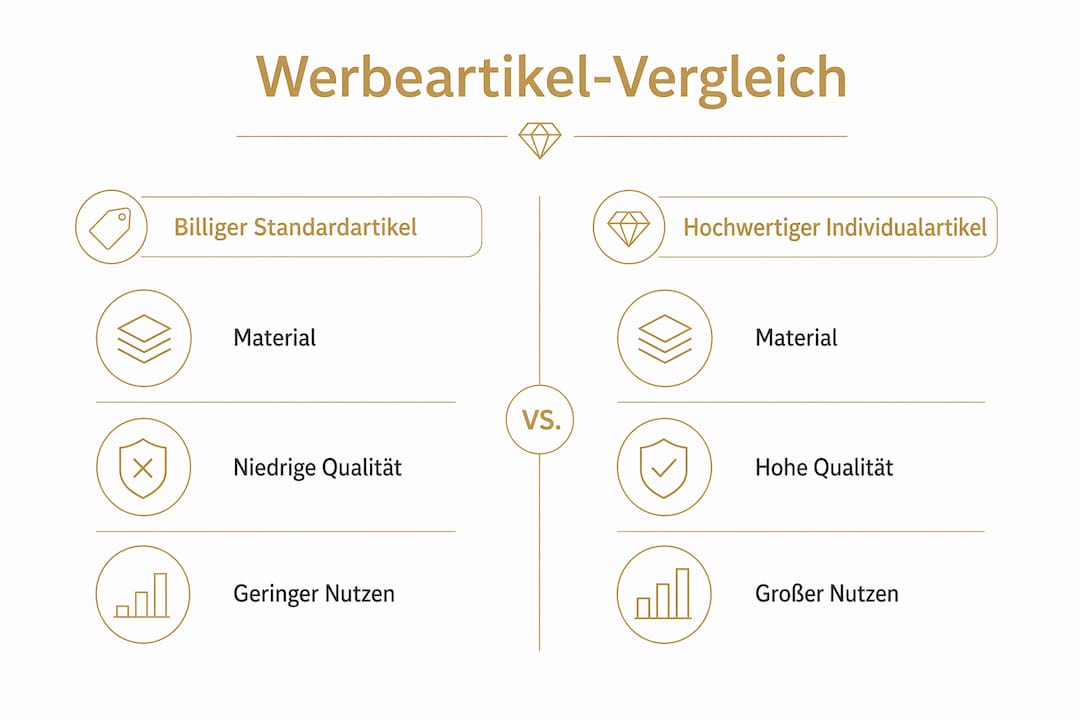
Professional tip: Choose materials that match the positioning of your brand. A technology company that includes glass objects 3D subsurface engraving give away, communicate precision and value without a single word.
Marketing experts specifically warn against viewing promotional products as cheap. Quality significantly raises the brand value and emotional attachment to a company. Anyone who saves here, pays twice: once for the item, once for the image damage.
Why does the operational implementation of promotional product projects often fail?
Lack of operational planning and control are the biggest stumbling blocks in promotional product campaigns. Creative ideas do not fail due to a lack of creativity, but to poor process management. That's a finding that surprises many marketing managers.
The most common operational errors in practice:
- Too short schedule: Production times, release loops and delivery times are underestimated. Those who order three weeks before the event risk empty hands.
- Missing buffers: Delivery chains without reserves render even the best products ineffective. Buffers must be planned firmly, not as an option.
- Unclear responsibilities: If no one is clearly responsible, quality checks and clearances fall through the grid. Late releases prevent necessary corrections.
- No briefing for suppliers: Without clear briefing on colors, dimensions and logo versions, deviations are created that damage the corporate design.
- Lack of success measurement: Those who do not check whether articles arrive, are used and show effect repeat the same mistakes in the next project.
Point three is particularly critical. Ce releases come late internally, there is no time left for quality assurance. The result is articles that arrive on time, but do not meet the requirements. And then the budget is gone without the brand having benefited.
How do you create effective promotional products that really work?
Effective promotional products solve a concrete problem in the everyday life of the recipient. Articles that reduce friction in everyday life are much better used and generate more visibility for the brand. A glass object on a decision-maker's desk is visible daily. A cheap ballpoint pen disappears into the drawer.
Anyone who plans promotional products as a brand ambassador and does not treat them as a side project first thinks of the target group. What items fit the daily work of the recipients? What message should the article convey? And what quality corresponds to the demand of the brand?
Specific criteria for selection:
- Target group benefit: The article must have a clear place in the everyday life of the recipient.
- Everyday relevance: Useful articles like Personalized glass power banks combine function with brand presence.
- Individualization: Personalized items generate more appreciation than standard goods with printed logo.
- Small series: Target group saturation quickly devalues standard goods. Low, suitable quantities for relevant contacts generate better use and higher appreciation.
| Criterion | Standard Goods | Individual promotional products |
|---|---|---|
| Target group fit | Low | High |
| Useful life | Short | Long |
| Brand recall | Weak | Strong |
| Cost per contact | High | Low |
High-quality, target group-specific products can generate more relevant visual contacts in everyday work than generic giveaways. This is not a marketing promise, but a direct consequence of the article being used and not disposed of. And for digital marketing campaigns designed to complement promotional products, it’s worth looking at experienced agencies that think both channels together.
Important insights
Generic promotional products fail because a lack of target group orientation, poor quality and poor process planning together ensure that budget is wasted and brand value is damaged.
| Topic | Details |
|---|---|
| Main reason for failure | , focus on unit price instead of utility leads to items that no one keeps. |
| Quality as a success factor | Material and workmanship decide whether an item strengthens or weakens the brand. |
| Operational planning | Buffers, clear responsibilities and physical patterns prevent expensive errors. |
| Target group analysis | Small, suitable series for relevant contacts work better than mass distribution. |
| Individualization | Personalized items generate more appreciation and longer useful life. |
High-quality glass products by inCrystal as promotional products
Branded glass promotional products stand for durability and value. They don't end up in the trash because they're too nice for it.
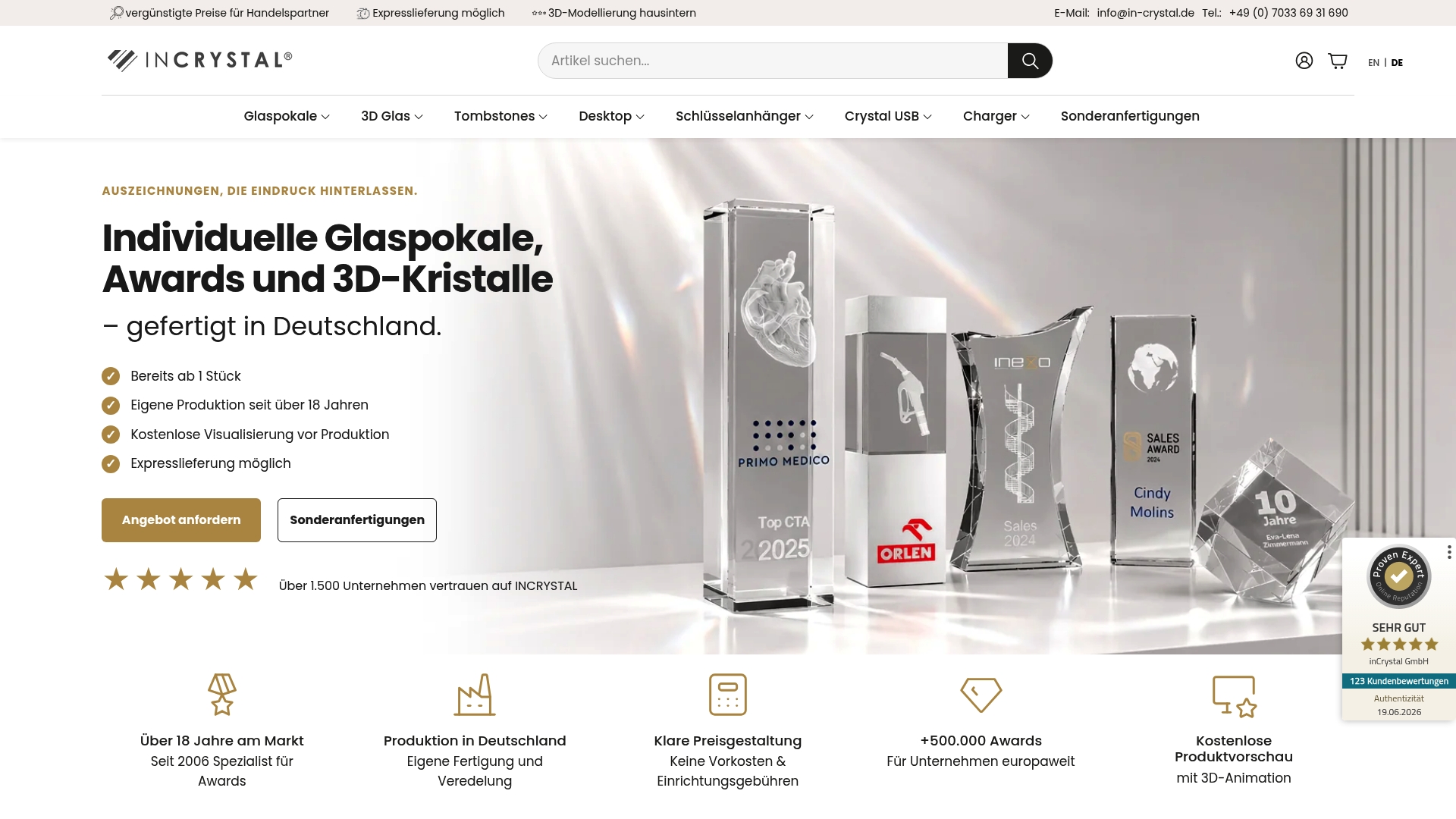
inCrystal has been producing individual glass trophies, awards and 3D crystals with a unique 3D engraving for over 18 years. Companies can permanently and aesthetically immortalize their brand message in the glass. Each item is a unique piece that matches the recipient and the brand. Express delivery is possible, a free 3D visualization included. Hundreds of companies trust this quality. Anyone who Exclusive promotional products made of glass seek, finds the right product at inCrystal. For special occasions, there are also Glass trophies with noble engraving on.
FAQ
Why do generic promotional products end up in the trash so often?
Generic promotional products offer no discernible benefit in the everyday life of the recipient and appear cheap due to poor quality. Anyone who has no reason to keep an article disposes of it.
How to choose promotional products for the target group?
Start with the question of the concrete benefits of the article in the daily work of the recipient. Adapt material, design and individualization to the brand message and context.
Why are cheap promotional products a risk to the brand?
A cheap item that is quickly failed or disposed of connects the recipient with negative experiences. This hurts the brand image and is economically more expensive than a high-quality, durable article.
How much upfront does a promotional product project need?
Schedule at least six to eight weeks to handle production, sample testing, releases and delivery without time pressure. Buffers for corrections are not a luxury, but a duty.
What really makes a promotional item effective?
An effective promotional item fits the target group, has a clear function in everyday life, is individualized and made of a material that reflects the brand positioning.