




Posted by Andreas Vavelidis
on July 13, 2026

Promotional gifts are a direct means of communication between company and recipient. Those who know the common mistakes in giveaways actively protect their brand image. Lack of target group orientation, poor quality and lack of personalization lead to negative brand perception in up to 50% of cases. That's not a small risk. If you consider promotional products as a pure cost factor, you give away potential. The following sections show which errors occur most frequently in practice and how to specifically avoid them.
1. Common mistakes in giveaways due to lack of target group orientation
The most common mistake in promotional gifts is a gift without reference to the target group. A ballpoint pen for a technology partner or a keychain for a premium customer sends the wrong signal. The recipients immediately notice whether a company has thought about it.
Of different recipient groups have fundamentally different expectations:
- Trade fair visitors expect practical, easily transportable items such as notepads, USB sticks or pockets.
- Longtime business partners respond to high-quality, personalized objects that express appreciation.
- New customers benefit from items with a clear product reference that explain the company’s offer.
- Employees products with personal benefits in everyday life, such as thermal cups or quality notebooks, appreciate items with personal benefits.
Those who ignore these differences generate scattering losses. The budget goes into articles that no one keeps. Strategic errors such as missing target group analysis prevent the effect of promotional products measurably.
Professional tip: Ask your sales representatives before each order: What three things do our customers use every day? The answer provides better ideas than any catalogue.

A good overview of typical stumbling blocks in promotional gift projects offers the Branded gift Guide from inCrystal.
2. Quality defects permanently damage the brand image
Cheap products send a clear message. Not the wanted. A ballpoint pen that fails after two weeks, or a textile print that fades after the first wash, remains in the memory. Negatively.
Trial prints and physical patterns are essential before placing a bulk order. Original materials regularly deviate from the digital design. Anyone who skips this, risks a delivery that does not correspond to what looked good on the screen.
, strictivity assurance, concrete steps:
- Request sample piece: Send a physical sample before each order and check the feel, print and workmanship.
- Set material specification: Define minimum requirements in writing, such as grammage of textiles or glass thickness for glass products.
- Compare print image: Hold the pattern next to your corporate design manual. Colors often deviate in print.
- Evaluate supplier: Check the supplier’s references and production standards before placing an order.
Umble engravings significantly increase the perceived quality in the premium segment, while oversized logos are perceived as disturbing. This is especially true for glass products, leather products and metal objects.
Professional tip: Order a small series of 10–20 pieces from new suppliers before releasing the main quantity. This costs little and protects against expensive surprises.
3. Personalization goes far beyond the corporate logo
A logo on an item is not a promotional gift. It is a promotional item. The difference is in emotional relevance. Emotionally relevant giveaways leave a stronger impression than expensive but impersonal items.
Personalization means specifically:
- Name of the recipient on the article or packaging, for example in the case of anniversary gifts or awards.
- Reference to the occasionFor example, an engraved year for the company anniversary or a date at a product launch.
- Individual packaging with handwritten greeting card that addresses the recipient directly.
- Content reference to the industry or to the project that connects the company and the recipient.
Frequent mistakes in anniversary gifts arise right here. Companies order standard articles with logo print and call this personalization. The recipient notices the difference immediately. Anyone who, on the other hand, one Personalized glass products with the name of the recipient and a reference to the common history, created real bond.
Personalization also has a measurable effect on customer loyalty. Anyone who feels reminded, buys again. This applies in the B2B sector as well as in the retail business.
4. Logistical errors: quantity calculation and timing
Incorrect quantity calculation is one of the most expensive mistakes in the promotional gift process. Ding too much means storage costs and waste. Too little means supply bottlenecks exactly when an event takes place.
| Errors | Follow | Solution |
|---|---|---|
| Too large order quantity | Storage costs, disposal | Needs analysis before ordering |
| Too small order quantity | Bottleneck at the event | Plan buffers of 15-20% |
| Too late order | Last-minute emergency solution | Lead time 6–8 weeks |
| No time buffer | Loss of quality due to haste | Set binding delivery data |
Buffer planning for availability of goods is standard in successful campaigns. Anyone who ignores this ends up in the situation of having to switch to inferior fast goods shortly before a trade fair or a customer event.
Delivery time must include a buffer of at least 2–4 weeks for unforeseen delays. This is especially true in finishing processes such as engraving, printing or individual packaging. Verest the time required for finishing processes directly leads to loss of quality, because suppliers compromise under pressure.
Early delegation helps. Anyone who firmly assigns the promotional gift planning to a team member and sets binding milestones, avoids hectic decisions at the last minute. E marketing managers who do the subject by the way regularly produce mistakes that could be avoided.
5. Promotional gifts must match the company values
Contradictory giveaways damage a company’s credibility. This sounds abstract, but it is concrete: a company that communicates sustainability as a core value and at the same time distributes cheap plastic ballpoint pens sends a contradictory signal. Sustainability versus cheap plastic is the most well-known example of value incongruity in promotional gifts.
Brand coherence is not a luxury. It is a prerequisite for a giveaway to achieve the desired effect. Anyone who Sustainable promotional products chooses, at the same time strengthens the brand promise.
Before each order, a short value check is worthwhile:
- Does the material fit the sustainability claim of the company?
- Does the price range fit the positioning claim of the brand?
- Does the article fit the occasion and the relationship with the recipient?
- Would the management want to hand over this gift itself?
Anyone who answers these four questions yes is usually correct. If you answer even one with no, you should rethink the selection.
6. Do not forget compliance and tax documentation
Promotional gifts have tax consequences. This is overlooked by many marketing managers. Tax exemption limits for material contributions must be checked and all giveaways must be documented cleanly to avoid additional payments.
The documentation must state: Who received the gift, what was gifted and what value it had. This sounds bureaucratic, but protects against problems with an audit. Especially for higher-quality items such as engraved glass trophies or personalized present sets, careful accounting is mandatory.
Anyone who the Corporate Gifting StrategyVotes with accounting from the outset saves subsequent effort. Compliance is not an obstacle. It is part of a professional planning.
7. Lack of success measurement makes budgets invisible
Promotional gifts without measuring success are expenses without gaining knowledge. If you don’t know if an article will arrive at the recipient, you can’t improve your next campaign. This is a structural error that is repeated in many companies.
Simple measurement methods work without much effort. A short feedback from the sales department after an event, a follow-up e-mail with feedback question or a comparison of the customer loyalty rate before and after a gift campaign provide usable data. Avoid bad promotional gifts begins with understanding what actually produces effect on the recipient.
If you understand giveaways as an instrument for brand maintenance, you also measure their effect. The budget then does not justify itself by the unit price, but by the contribution to customer loyalty.
Important insights
Errors in promotional gifts almost always arise from missing planning, incorrect target group analysis or the grip on the cheapest offer.
| Topic | Details |
|---|---|
| Target group orientation | Giveaways without a recipient reference generate scattering losses and negative perception. |
| Quality assurance | Trial prints and physical patterns before bulk orders are indispensable. |
| Personalization | Emotional relevance suggests expensive but impersonal articles at the effect. |
| Logistics and timing | Pose at least 2–4 weeks of buffer to avoid quality loss due to time pressure. |
| Values congruency | Promotional gifts must match the brand promise, otherwise they will hurt credibility. |
High-quality promotional gifts made of glass by inCrystal
Generic promotional products do not solve the problem. They generate short-term visibility. inCrystal has been offering for over 18 years Exclusive promotional gifts made of glass with 3D subsurface engraving. Each piece bears the brand message of the client permanently and visibly.
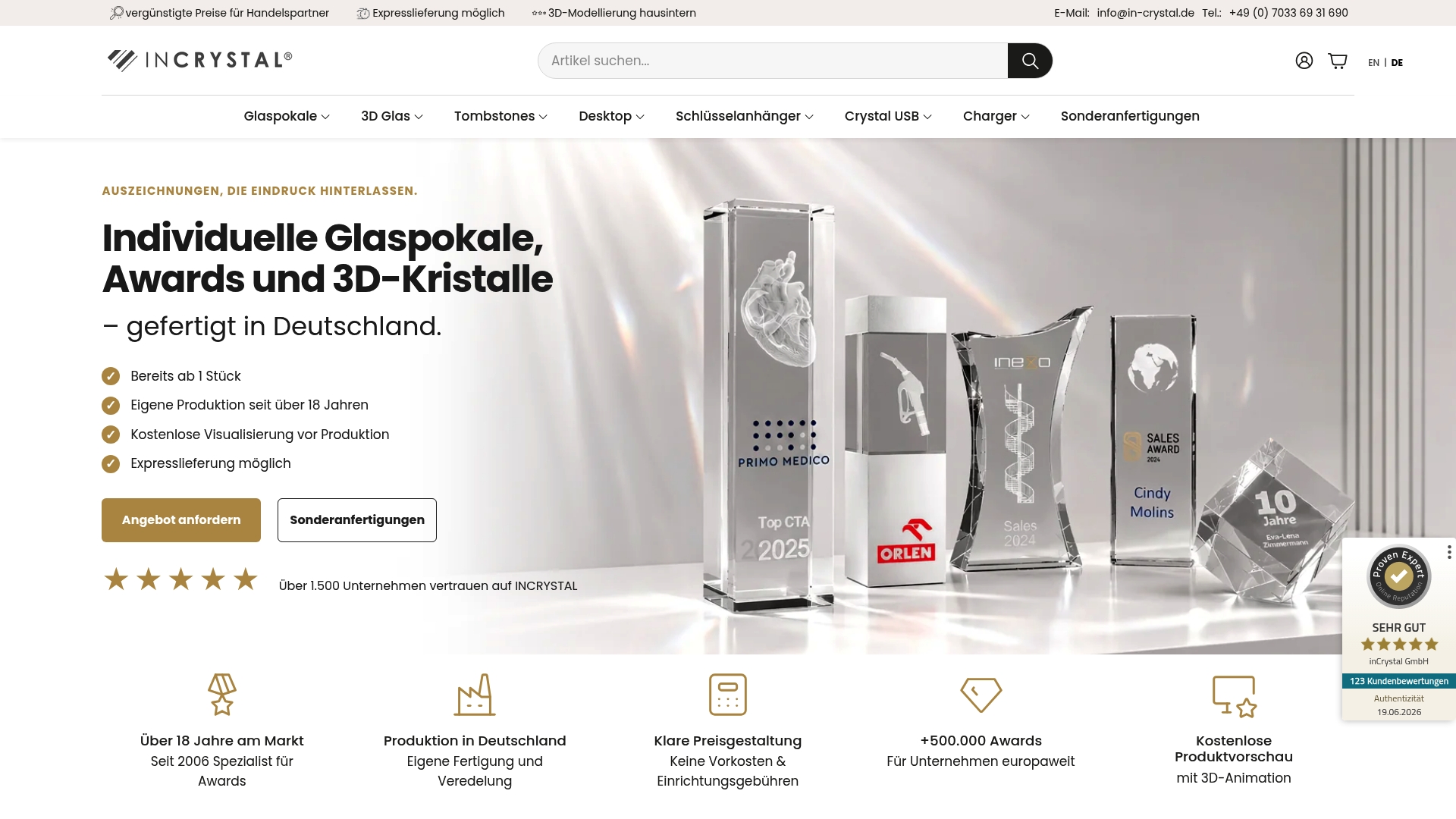
The 3D subsurface engraving allows individual motifs, logos and names directly in the glass. The result is an article that recipients keep. inCrystal offers a free 3D preview before ordering, express delivery and personal support. Hundreds of companies have already relied on this approach. The first step is the non-binding preview.
FAQ
What are the most common mistakes in promotional gifts?
Lack of target group orientation, poor quality and lack of personalization lead to negative brand perception in up to 50% of cases. In addition, there are timing errors and value incongruity between gift and brand promise.
How do I choose promotional gifts correctly?
Ask three questions before selecting: Does the article fit the target group, the occasion and the company values? Anyone who answers yes to all three, usually makes the right decision.
How early should I order promotional gifts?
Schedule at least 6–8 weeks before the deployment date. For articles with finishing such as engraving or individual printing, you should also include a buffer of 2–4 weeks.
Do promotional gifts need to be documented for tax purposes?
Yes. In-kind contributions to business partners are subject to tax exemptions. Document recipients, items and value clean to avoid additional payments during an audit.
Why are personalized glass items particularly effective as a giveaway?
Glass products with 3D subsurface engraving combine high material quality with individual personalization. In the long term, recipients retain them, which permanently strengthens the brand presence.