




Posted by Andreas Vavelidis
on July 07, 2026

Corporate gifts are no longer a nice accessory in 2026. They are a customer loyalty tool that produces measurable impact. The German promotional products market was estimated at several billion euros in 2024. Those who know the entrepreneurial gift trends in 2026 will no longer give away a budget for mass items that disappear in the closet. Three factors determine the field: quality, personalization and sustainability. In addition, there is a surprising insight: Generation Z shows a strong affinity for physical, personalized presents, which many marketing professionals did not expect.
What are the Corporate Gift Trends 2026 explained by product category?
Culinary gift boxes with regional specialties are a common option in 2026. They work personally, can be easily connected to the company brand and are equally well received by customers and employees. In addition, there are high-quality office products and long-lasting everyday helpers, which are used daily and thus permanently create a brand presence.
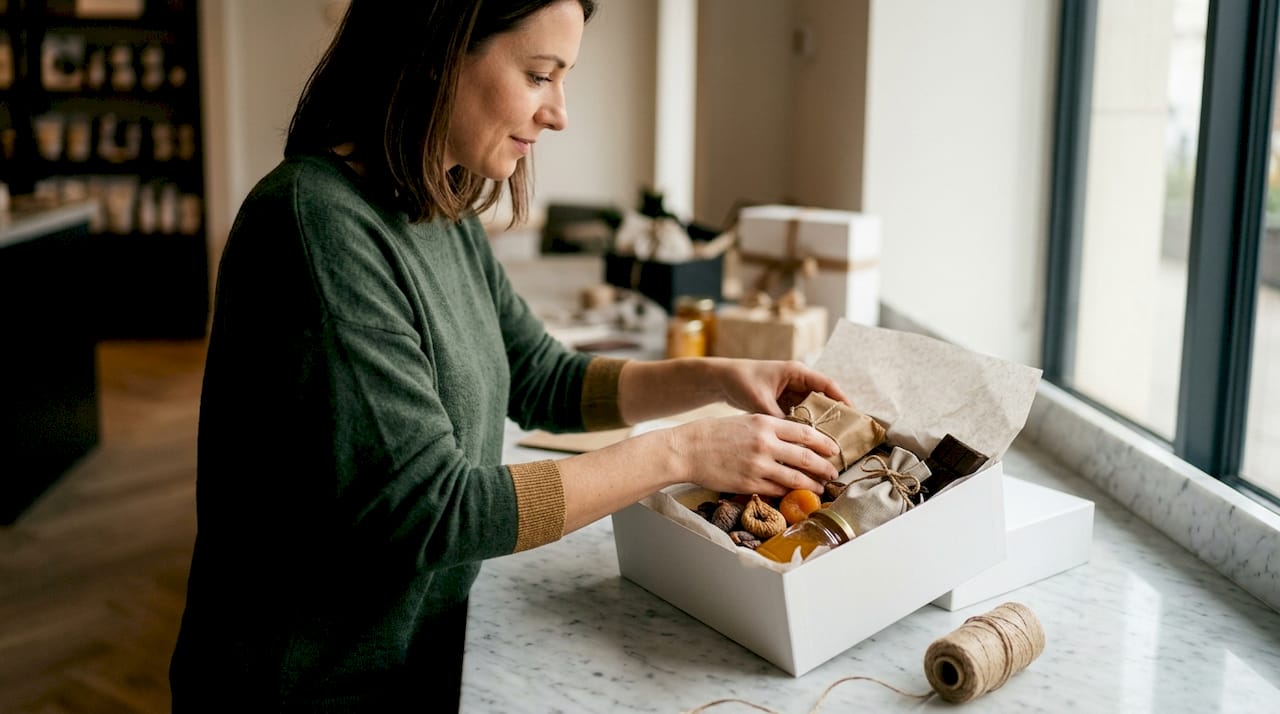
Individual gift bundles are stronger than individual gifts for customer loyalty. A bundle of thermal cup, notebook and a small speciality suggests three separate items arriving at different times. The overall impression counts.
Sustainable materials are no longer an optional upgrade. The most used materials 2026:
- RPET (recycled polyethylene terephthalate): for bags, backpacks and bottles
- FSC wood: for stationery, packaging and decorative items
- Organic cotton (GOTS certified): for textiles such as shirts and bags
- OEKO-TEX certified fabrics: for clothing and accessories with skin contact
- Stainless steel: for thermo cups, drinking bottles and cutlery with long service life
The target group determines the type. Curated premium sets with engraving are suitable for top customers. For employees, everyday helpers with a personal reference work better than representative objects. For trade fair visitors, compact, lightweight items are useful, which can be easily taken with you.
Professional tip: Seasonal everyday helpers such as thermal cups, umbrellas or lip care are used daily and thus create continuous brand visibility over months.
How to effectively design the budget planning for Corporate Gifts 2026?
Budget planning for corporate gifts follows a clear three-stage logic in 2026. Those who know these levels avoid both waste and image damage due to too cheap items.
- Giveaway: Suitable for trade fairs, major events and broad target groups, provided that product benefits and quality are right.
- Standard Gifts: For existing contacts and existing customers. Notebooks, simple thermo cups, cups. Solid quality, but not an emotional bond.
- Premium gifts (from 10 €, recommended 27–35 € per piece): For key customers, executives and special occasions. High-quality textiles have a visibility duration of 12–24 months. Stainless steel products are 27–35 € and are considered a sensible standard for this segment.
The comparison is clear: the actual useful life of standard articles varies greatly. High-quality textiles can be used for a long time if the selection is suitable. The brand contact per euro is significantly higher in the premium article. This is not a luxury argument, it is mathematics.
Cheap mass-produced items are an image trap. If you give away 500 inferior ballpoint pens, send a clear message: The recipient is not worth investing more. This perception hurts the brand more than not to give a gift.
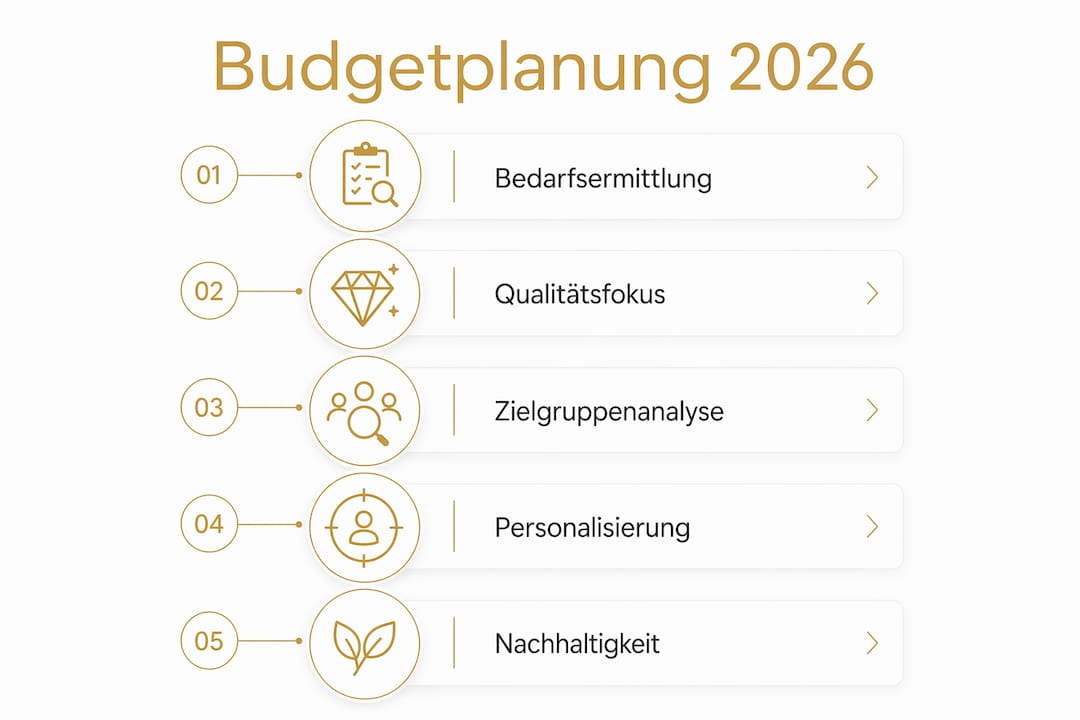
Professional tip: 20–50 high-quality presents for key customers instead of hundreds of cheap items. Less, but better, has been proven to produce more brand loyalty.
For the deduction of operating expenses, a 50-euro limit per recipient per year applies to gifts to business friends; requirements and VAT treatment should be tax-examined. This creates scope for real premium items without risking tax complications.
Sustainability plays in corporate gifts 2026?
Sustainability is a relevant procurement criterion in 2026. Is basic expectation. Recipients notice very well whether a gift is wrapped in plastic film or in a recycled cardboard box with paper insert. The first signal comes before unpacking.
The choice of material follows clear certificates:
- GRS (Global Recycled Standard): for recycled materials such as rPET
- GOTS (Global Organic Textile Standard): for organic textiles
- FSC: for wood and paper from responsible forestry
- OEKO-TEX Standard 100: for pollutant-tested textiles
| Certificate | Material area | Relevance for corporate gifts |
|---|---|---|
| GRS | Recycled plastics, rPET | Bags, bottles, backpacks |
| GOTS | Organic cotton, textiles | Shirts, pouches, accessories |
| FSC | Wood, paper | Stationery, packaging |
| OEKO-TEX | All textiles | Clothes, scarves, scarves |
The EU Packaging Regulation (PPWR) applies in principle from 12. August 2026; individual obligations and transitional periods must be examined separately. This Regulation also strengthens the requirements for packaging for promotional products. Plastic packaging without a recycling share is becoming more regulatoryly difficult. Those who now still rely on conventional packaging risk the need for improvement during ongoing operation.
Professional tip: Rely on local EU production. Regional manufacturing minimizes delivery delays, especially in the autumn business, and improves the carbon footprint of your gift strategy.
Long, refillable products such as stainless steel bottles or thermal cups made of recycled material meet several requirements: They are sustainable, usable daily and create a permanent brand presence. Co-branding with its own history, i.e. Products that are locally manufactured and communicate an origin, additionally increases the conversation value. Locally manufactured drinking bottles improve the ecological balance and strengthen employer branding.
How does personalization improve the impact of corporate gifts?
Personalization is the strongest lever for effect and service life. But personalization does not mean printing a large logo on an item in 2026. The opposite is true.
The branding design follows the subtle philosophy. Laser engraving and relief embossing significantly increase the probability of use of gifts. A thermal cup with subtle engraving is taken with it daily. The same cup with a large corporate logo remains rather in the closet.
Why this is so, is explained from the recipient perspective. 't you want to be a walking advertising poster. A gift that is discreetly refined feels valuable. It belongs to the recipient, not the brand. Is exactly what creates the desired emotional attachment.
Specific methods for personalization 2026:
- Laser engraving: durable, high quality, suitable for metal and glass
- Relief stamping: for leather, cardboard and textiles, looks noble and durable
- 3D subsurface engraving in glass: for exclusive executive gifts with high recognition value
- Individual name imprint: for staff gifts with personal reference
- Bespoke packaging: Color, material and message tailored to the brand
Personalized promotional gifts achieve a significantly longer service life, according to market data. 62% of the promotional products are used for over a year, 40% even longer than two years. This is especially true for articles that are individually designed and make a personal reference.
The packaging is part of the gift. A high-quality article in a simple plastic bag immediately loses effect. A sophisticated packaging made of recycled cardboard with a handwritten card takes the overall experience to another level. This aspect is often underestimated in planning.
Fashionable, minimalist refined gift sets support professional communication and look more sustainable than cluttered packages. Fewer elements, better selected, more clearly communicated.
What best practices should companies consider in 2026?
Target group-oriented selection is the basic requirement. A premium gift for a trade fair visitor is waste. A giveaway for a key customer is a mistake. The assignment of gift type to recipient group belongs in every planning process.
Timing is critical. Autumn campaigns for Christmas and year-end gifts must be ordered no later than September. Those who order in November risk delivery delays, especially for individually manufactured items. Local EU production helps, but it also needs lead time.
Quality before quantity is considered a basic principle. 20–50 high-quality presents achieve more brand loyalty than hundreds of cheap items. Favorable mass-produced items are perceived as indifference. This is not a subjective judgment, but a perception that directly affects the customer relationship.
Corporate Gifts are also an instrument of employer branding. Employee retention through individual gifts strengthens the corporate culture and signals appreciation. Especially in times of shortage of skilled workers, this is an underestimated factor.
Professional tip: Do not communicate the gift too loudly. A short, personal message works better than an accompanying letter with product benefits. The gift should speak, not the brochure.
A common pitfall: gifts that celebrate the sender more than the recipient. Anyone who overloads a gift with their own corporate logo communicates self-interest. Anyone who chooses a gift that fits the recipient, communicates attention. The difference is noticeable. Individually personalized promotional gifts strike this tone much better than generic mass-produced items.
Important insights
Effective Corporate Gifts 2026 combine quality, subtle personalization and sustainable materials, because only these three factors together create emotional bonding and enduring brand presence.
| Topic | Details |
|---|---|
| Budget Levels 2026 | Premium items can remain visible longer than short-lived giveaways with a suitable selection. |
| Sustainability as a duty | The PPWR is generally valid from 12. August 2026; specific requirements and transitional periods must be examined in a product-related manner. |
| Subtle branding | Laser engraving and relief stamping increase the service life because recipients do not want to be an advertising space. |
| Personalization works | 62% of promotional products are used for over a year, with personalized items this value continues to rise. |
| Quality before quantity | 20–50 high-quality gifts produce more brand loyalty than hundreds of cheap items. |
inCrystal: High quality glass gifts for your gift strategy 2026
If you rely on premium gifts in 2026, you need items that will be remembered. inCrystal has been producing individual glass trophies, awards and awards and 3D glass cube with subsurface engraving for companies that want to stand out from generic promotional products.
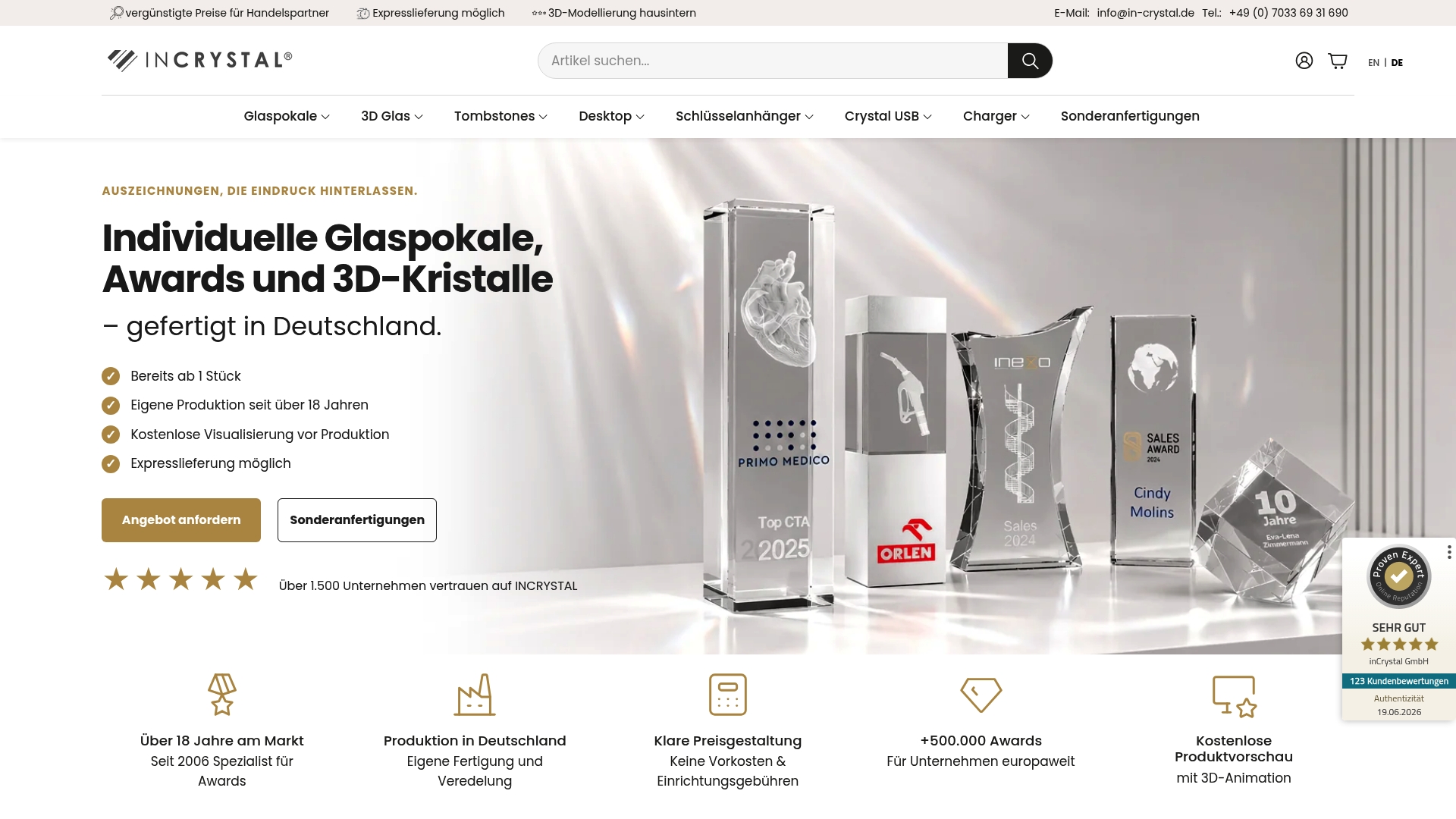
The 3D subsurface engraving by inCrystal makes it possible to permanently immortalize brand messages, logos or individual motifs in the glass. The result is a present with a real recognition value that no recipient throws away. Express delivery is possible. The free 3D preview shows the finished product before ordering, without risk and without any upfront costs.
FAQ
What are the main corporate gifts trends 2026?
Quality, personalization and sustainability dominate in 2026. Culinary gift boxes, high-quality everyday helpers and individually engraved premium items lead the categories.
What budget makes sense for corporate gifts in 2026?
For key customers, 27–35 € per piece is recommended. For the deduction of operating expenses, a 50-euro limit per recipient per year applies to gifts to business friends.
Why is sustainability mandatory for corporate gifts in 2026?
The EU Packaging Regulation (PPWR) applies in principle from 12. August 2026; which requirements apply in individual cases must be tested in a product- and packaging-related manner. Certificates such as GRS, GOTS and FSC are landmarks for choice of materials.
How long are promotional products actually used?
62% of promotional products are used for over a year, 40% even longer than two years. The useful life depends heavily on product quality, target group and practical benefits.
Why does subtle branding work better than big logos?
Recipients use gifts more often when branding is subtle. Laser engraving and relief stamping increase everyday use because the object is perceived as personal property, not as an advertising tool.